Industrial AI
Industrial Knowledge Intelligence

Unplanned downtime is one of the biggest challenges in modern manufacturing — and the root cause is often not a technical failure, but a knowledge problem. This article looks at why troubleshooting is getting harder, where traditional solutions fall short, and how Industrial Knowledge Intelligence is changing the way manufacturers capture and apply expert know-how.
It’s 2:15 a.m. on the production floor.
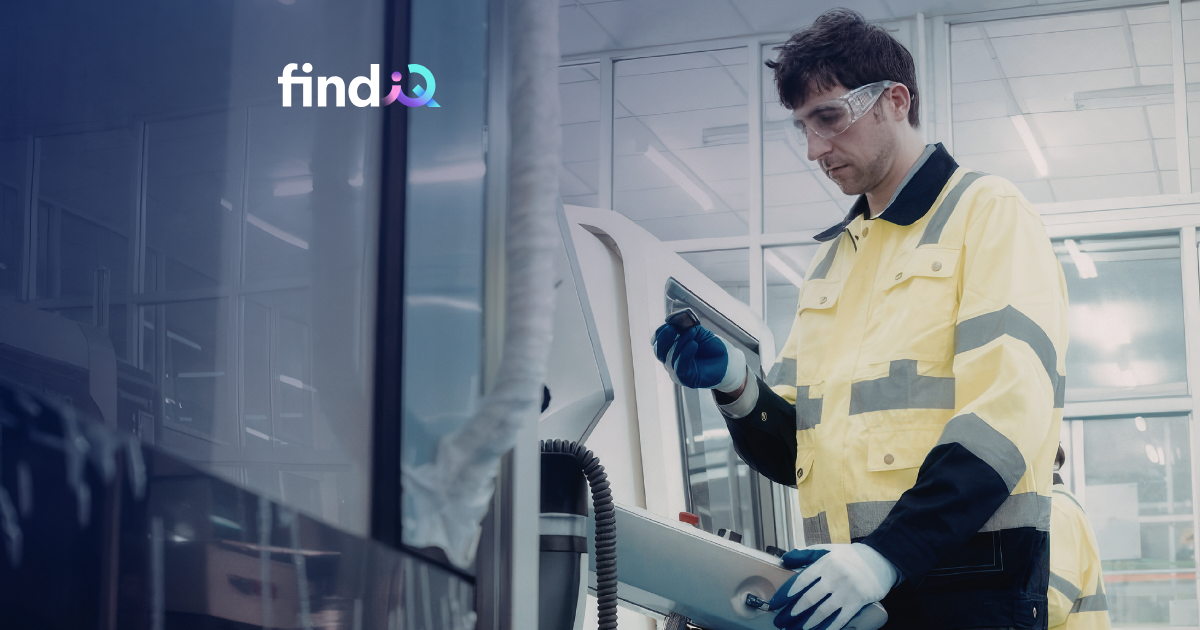
A critical machine has stopped unexpectedly. A technician investigates the error message and checks the usual components. Nothing obvious stands out. Their next step? Pulling out the maintenance manual. While it describes how the machine operates, there’s no mention of this particular failure. Of course, there's no direction on how to solve it either.
Next, they do what most technicians do in this situation, they call the one person who might know. That person is an experienced technician who has seen this problem before. They’ve been with the company for 15+ years, worked on every machine in the place. At this point, they understand how each piece behaves in the real world. They also know exactly what to do when one stops working.
Unfortunately, tonight, that person isn’t available. So, the clock keeps ticking.
For many manufacturers, this scenario is painfully familiar. When machines fail, troubleshooting often depends on the availability of a small number of experienced technicians who have learned — over years of trial, error, and observation — how to diagnose complex problems.
When those experts are unavailable, downtime stretches longer than it should.
Why troubleshooting keeps getting harder
Manufacturers today have more technology than ever before. But ironically, solving machine problems has become more difficult. 55% of manufacturers experienced unplanned downtime last year, and many report 6–10 incidents every week.
It seems to go against logic. However, multiple factors, all converging at the same time, can explain why this is happening .
Machines are becoming more complex.
Automation, software layers, and integrated systems have dramatically improved performance — but they’ve also introduced more potential points of failure.
Workforce experience is shrinking.
Many of the technicians who developed deep troubleshooting expertise over decades are retiring, taking their experiential knowledge with them.
Troubleshooting processes haven’t evolved.
In many plants, the escalation model still dominates: when a problem can’t be solved quickly, someone calls the expert.
That model worked when expert technicians were always nearby. But today, expertise is often distributed across plants, shifts, or even continents.
Why old solutions aren’t working
Manufacturers have tried to solve this problem in different ways. Documentation systems, manuals, and knowledge bases attempt to capture information about equipment. But documentation typically explains how machines should work, not how to troubleshoot unexpected failures in the real world.
Recently, more and more companies have started experimenting with AI (artificial intelligence (AI) in hopes that it can diagnose issues and advice on how to fix them.
There’s no questioning that AI is very good at analyzing data and generating answers quickly. But, generic AI systems can only work with the information already available online data that is fed to them by the user. Without can’t provide the precise, step-by-step guidance technicians need during a breakdown.
— Ryan Cahalane, Managing Director, LNS Research
In other words, the problem isn’t simply about information. It’s about how expert knowledge is captured and applied.
A new approach to operational knowledge
In 2022, findIQ began tackling this challenge from its headquarters in Herford, Germany. The company started with a simple question: What if the way experienced technicians diagnose and resolve machine problems could be captured and made available to every technician who needs it?
The answer became the first Industrial AI platform designed to deliver Industrial Knowledge Intelligence — a term coined by findIQ to describe how expert knowledge can be structured and applied during real service events.
Industrial Knowledge Intelligence captures the experiential knowledge of skilled technicians — how they recognize failure patterns, what they check first, and which corrective actions actually solve the problem — and transforms it into workflows that guide technicians step by step.
The result is a fundamental shift in troubleshooting. Instead of searching manuals or waiting for an expert to respond, technicians receive precise, real-time guidance that helps them diagnose and resolve problems faster.
From startup idea to global adoption
What began as an idea has quickly turned into a global solution. Leading industrial companies including Siemens AG, Elopak, and Phoenix Contact are now using findIQ’s Industrial Knowledge Intelligence Platform to preserve and share expert service knowledge across their maintenance organizations.
The platform helps manufacturers capture the expertise of their most experienced technicians and make that knowledge available wherever machines are operating.
Following rapid adoption in Europe, findIQ expanded into the United States in late 2025, opening its U.S. headquarters in New York City.
Turning experience into a system
Over the past decade, manufacturers have invested heavily in automation, predictive maintenance, and digital transformation. Yet many have overlooked one of the most valuable assets inside their organizations: the expertise of experienced technicians.
That expertise often remains untapped because it lives in the minds of individuals rather than in systems that others can access.
When knowledge stays locked inside a few experts, organizations become vulnerable to downtime, delays, and operational risk.
But when that knowledge is captured and shared across the workforce, it becomes a powerful competitive advantage.
That is the idea behind Industrial Knowledge Intelligence – turning individual expertise into a reliable capability the entire organization can use.
And as machines grow more complex and experienced technicians retire, this capability may become one of the most important drivers of operational performance in the decade ahead.
– Martin Möllmann, Principal @ HTGF | High-Tech Gründerfonds and findIQ investor
Learn how Industrial Knowledge Intelligence works
Manufacturers are beginning to recognize that downtime isn’t just a maintenance issue — it’s a knowledge problem.
Our new eBook, From Experiential Knowledge to Operational Excellence, explains how Industrial Knowledge Intelligence helps manufacturers capture expert know-how, standardize troubleshooting, and make reliable guidance available to technicians in real time.
Download the eBook to learn:
Download the eBook:
From Experiential Knowledge to Operational Excellence
findIQ is the first Industrial Knowledge Intelligence platform — turning expert know-how into precise, scalable maintenance and troubleshooting guidance technicians can trust.
Why do machine downtimes often last longer than necessary?
Because fault diagnosis frequently depends on a few experienced technicians. When they are unavailable, the process stalls – regardless of existing manuals or documentation.
What is Industrial Knowledge Intelligence?
An approach that systematically captures the experiential knowledge of skilled workers and transforms it into digital step-by-step workflows – accessible to every technician, anytime and anywhere.
Why are traditional knowledge databases and AI tools not enough?
Documentation describes how machines are supposed to work – not how to fix unexpected faults in practice. Generic AI, on the other hand, lacks the context-specific expert knowledge needed for precise guidance.
Which companies are already using the findIQ platform?
Leading industrial companies such as Siemens, Elopak, and Phoenix Contact use findIQ to capture and share expert knowledge across their maintenance organizations and production sites.
What happens when experienced technicians retire?
Their knowledge is lost – unless it was systematically captured beforehand. Industrial Knowledge Intelligence transforms individual expert knowledge into a scalable capability that the entire organization can benefit from.