findIQ was at the Smart Factories Summit in Chicago. What we saw there confirmed what we know from the field: AI in manufacturing is no longer a future topic – but many companies are still wrestling with the same fundamental challenges.
A High-Caliber Crowd With Clear Expectations
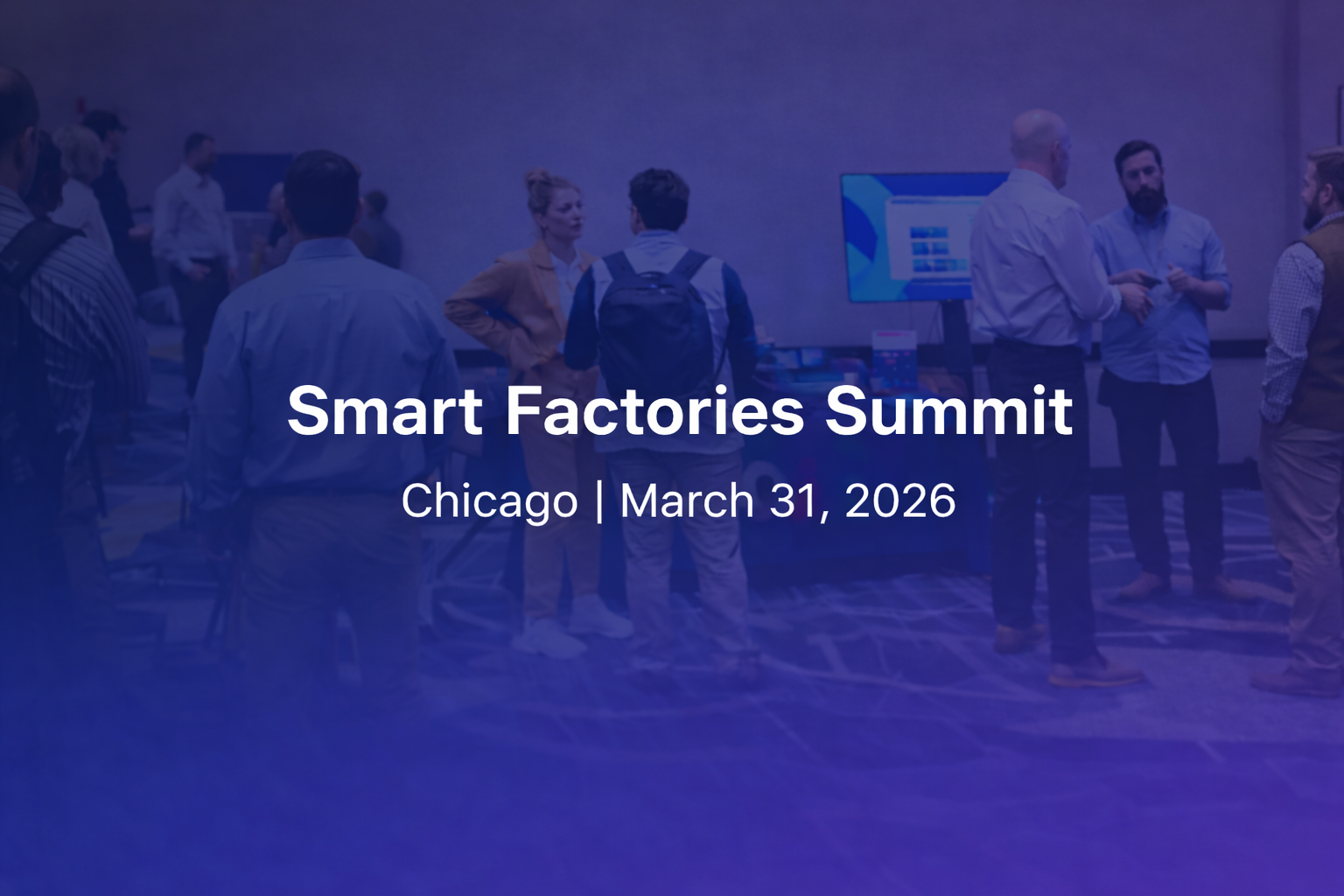
The Smart Factories Summit on March 31, 2026, at the Hilton Chicago O'Hare was not a place for beginner debates. The room was filled with operations leaders and digitalization executives from companies like John Deere, ExxonMobil, Lenovo, Nvidia, Volkswagen, and Kimberly-Clark. Organizations that are no longer asking whether to use AI – but how to finally get it to scale.
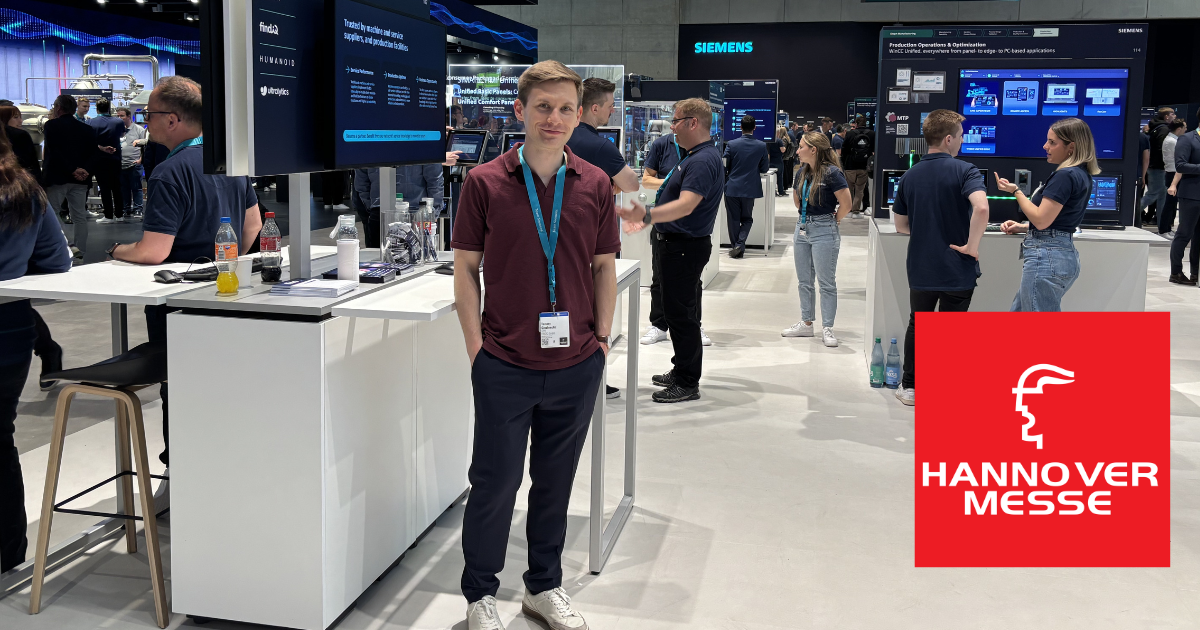
findIQ was on the floor with a live tech demo and active participation in workshops. Our contribution: the transatlantic perspective. What can American manufacturers learn from German mechanical engineering when it comes to getting AI pragmatically onto the shop floor?
The Real Problem Isn't AI – It's Scaling
One insight ran through nearly every session: most manufacturers don't have an AI problem. They have a scaling problem. Pilots succeed, but the path from a successful test installation to company-wide rollout remains blocked for many.
ExxonMobil named the root causes directly: inadequate data foundations, integration challenges, no clear roadmap. Companies that jump to technology before defining outcomes end up stuck.
The solution? Standardization over customization. Treating every machine, every site, every process as a special case means losing control of the bigger picture.
Experiential Knowledge: The Blind Spot in Most AI Strategies
What stood out to us at findIQ: many companies recognize that they need to capture and leverage the hands-on experience of their workforce – their so-called tribal knowledge. But they don't know how to get started.
In Germany, this challenge has long been treated as a strategic priority. Demographic shifts, the skilled labor shortage, experienced technicians retiring – these aren't abstract risks, they're operational realities. In the U.S., the same question is evident now, driven in no small part by the reshoring and distributed manufacturing waves bringing production capacity back onto American soil.
findIQ offers concrete answers: not a generic AI system, but Industrial AI trained specifically on a company's own service knowledge – precise, reliable, and ready to use from day one.
Chicago confirmed what we already believed: the demand is there. We had excellent conversations at our booth and exposed big manufacturing brands to findIQ’s solution. Events like this are exactly the right way for us to make findIQ more visible in America – and we'll keep showing up.
– Sina Volkmann, findIQ Co-founder & CEO
What We Learned: Four Trends from Chicago
1. From AI for Engineering to AI for Operations The focus is shifting. Engineers think long-term, in systems and scenarios. Operations needs decisions now – on the shop floor, in the moment. AI must deliver immediate impact through assistance systems, not analytical reports.
2. Human in the Loop Remains the Standard – For Now In manufacturing, it is still common practice – and recommends – to keep humans in the decision loop for AI-driven processes. Long-term, that won't be practical everywhere, but the transition to greater autonomy needs to be well-thought out.
3. Deterministic Models Are Gaining Ground Reliability beats creativity. In industrial environments, wrong answers can have serious consequences. Interest in models that deliver consistent, explainable outputs is growing – often in combination with more adaptive approaches. This is exactly where findIQ is positioned.
4. Bottom-Up, Not Top-Down The solutions that stick come from the floor up, not the boardroom down. AI initiatives designed at the executive level, without input from the people who actually use them, fail at implementation.
Bottom Line: US Manufacturers are Embracing Industrial AI – Fast
The Smart Factories Summit reinforced our conviction: industry doesn't need more concepts. It needs solutions that work – ones you can deploy tomorrow.
That's what findIQ is built for. Industrial AI that structures the knowledge of experienced technicians, makes it accessible to every team member, and delivers precise, actionable guidance – no guesswork, no delays.
Frequently asked questions
What was the Smart Factories Summit 2026 and who attended?
The Smart Factories Summit took place on March 31, 2026, at the Hilton Chicago O'Hare. Attendees included operations executives and digitalization leaders from companies such as John Deere, ExxonMobil, Lenovo, Nvidia, Volkswagen, and Kimberly-Clark – as well as findIQ, which participated with a tech demo and active workshop contributions.
Why do so many AI projects in manufacturing fail to scale?
The most common problem isn't the technology itself, but missing data foundations, lack of integration, and no clear roadmap. Treating every site and every process as a special case quickly leads to loss of control. The answer lies in standardization – rather than custom development for every single machine.
What is "Experiential Knowledge" and why is it so critical for industrial AI?
Experiential Knowledge refers to the knowledge of seasoned technicians and employees–knowledge that is rarely documented but keeps operations running. Due to demographic change and skills shortages, this knowledge is increasingly at risk of being lost. findIQ trains Industrial AI specifically on this company-specific knowledge to make it permanently accessible.
Which four AI trends are especially relevant for manufacturing?
Four clear trends emerged from the Summit: First, the focus is shifting from AI for engineers to AI for live operations. Second, human-in-the-loop remains the standard for now. Third, deterministic, reliable models are gaining ground over more creative approaches. And fourth, solutions that are developed bottom-up from the shopfloor are the ones that succeed – not top-down mandates.
What sets findIQ apart from generic AI solutions for industry?
findIQ is an Industrial AI platform that transforms expert technician knowledge into structured, repeatable workflows for machine troubleshooting and maintenance. Unlike generative AI, findIQ uses deterministic, model-based AI to deliver precise, reliable diagnostics in industrial environments. It helps manufacturers reduce downtime, accelerate training, and prevent knowledge loss from retiring workers.